
Guide · Updated August 10, 2026 · 7 min read
Cremation or burial in Québec: what each choice costs
Disclosure: this article is published by SoumissionVie.ca, an independent information site. If you request a quote through our links, we may receive compensation from licensed partners, at no cost to you. Learn more.
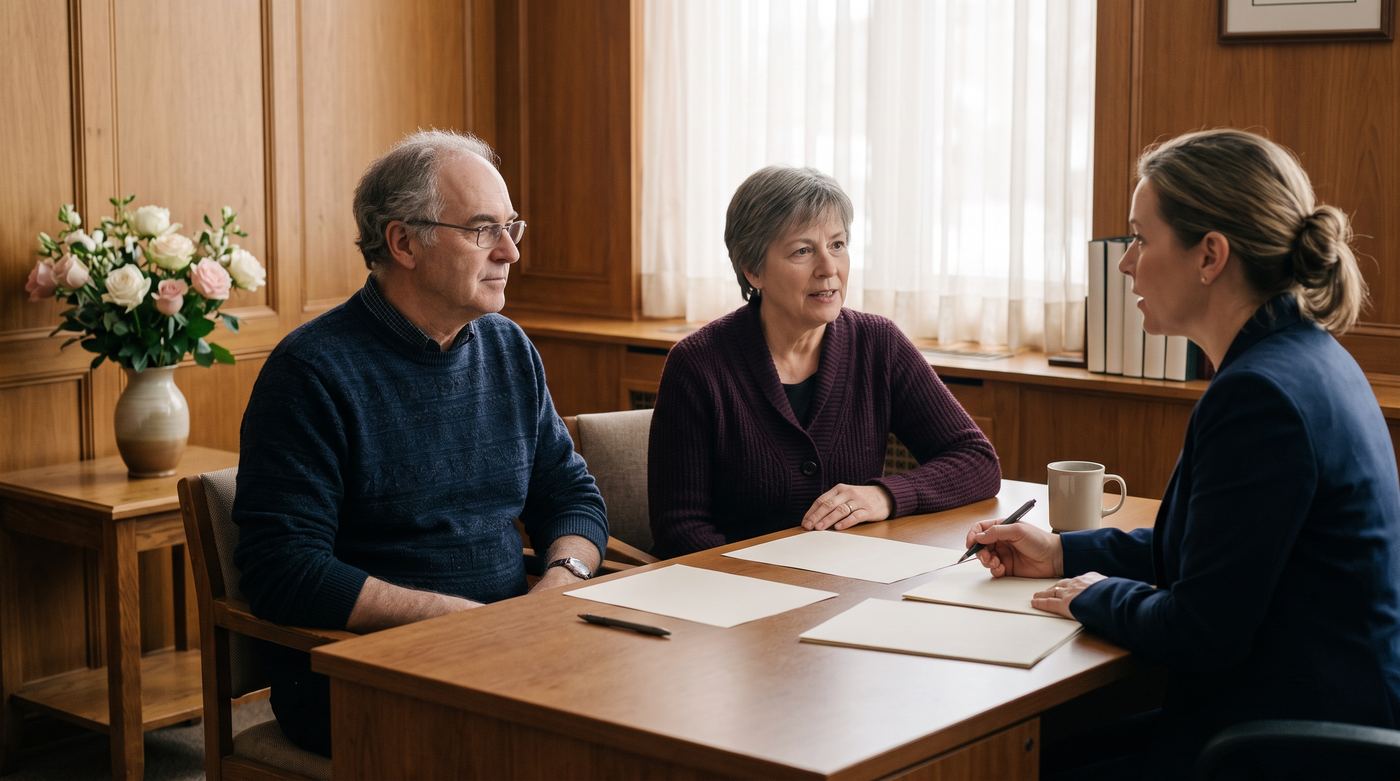
The question comes early in the meeting, often in the first twenty minutes: "Were you thinking of cremation or burial?" It is asked tactfully, by someone who has done this job for a long time. And the family generally answers with whatever the deceased mentioned once, in passing, without ever having wondered what either of those two words meant on the invoice.
That is normal. Nobody arrives prepared for this conversation. But the cost gap between the two routes is real, and it is less simple than the received wisdom that "cremation is cheaper" suggests. It often is. It is not always true for the reasons people imagine.
Two words that do not designate two packages
The first thing to understand: cremation and burial are not two competing products. They are two methods of disposing of the body, and each one fits inside a set of services that itself varies enormously.
A cremation can be followed by a viewing, a religious ceremony, a columbarium and an engraved plaque. A burial can take place with no viewing and no reception. Comparing "a cremation" with "a burial" without specifying what surrounds it amounts to comparing two prices that do not cover the same things.
That is precisely where most of the unpleasant surprises come from. The low figure the family has in mind comes from a stripped-down cremation. The ceremony they are picturing resembles the ones they have attended.
What actually costs money in a funeral
To know what a funeral bill is made of, there is a list with the advantage of being official: the list of expenses Retraite Québec agrees to reimburse through the Québec Pension Plan death benefit. It is not exhaustive, but it catalogues the recognized items.
| Expense item | Applies to cremation | Applies to burial |
|---|---|---|
| Transporting, storing and preserving the body | Yes | Yes |
| Embalming the body | Depending on whether there is a viewing | Depending on whether there is a viewing |
| Coffin | Sometimes, or rental | Yes |
| Urn, funeral jewellery, reliquaries, tree of life | Yes | No |
| Viewing at the funeral home | Optional | Optional |
| Funeral service | Optional | Optional |
| Burial, cremation or aquamation | Cremation | Burial |
| Funeral director's services | Yes | Yes |
| Publication of death notices | Yes | Yes |
| Cemetery plot, niche or crypt | Niche, if applicable | Plot |
| Funeral monument or inscription | Depending on the case | Often |
| Thank-you cards, memorial bookmarks | Yes | Yes |
Source: Retraite Québec, list of expenses eligible for the death benefit.
Read from top to bottom, this list says something important: most of the items are identical in both cases. The method of disposing of the body takes up only one line.
Why cremation generally shows a lower price
Three items account for most of the gap.
The container. A burial means buying a coffin meant to stay in the ground. A cremation in many cases allows for renting a coffin for the viewing, then using a simpler container, with the urn purchased separately. The Fédération des coopératives funéraires du Québec in fact lists coffin rental among the items usually included in the average cost it describes.
The space at the cemetery. A cemetery plot and a columbarium niche do not compare in area, nor in price. Retraite Québec takes this into account in its reimbursements: when a plot or a monument is paid for on behalf of several people, the agency recognizes only a proportional share. The example it gives is an $8,000 plot paid for four people, of which only $2,000 would be recognized for the deceased.
The monument. An engraved headstone and a columbarium plaque do not represent the same investment.
Compare before you decide
One request, up to three quotes from licensed Québec partners. Free and no obligation.
Prepare for these costs in advanceWhat cremation does not eliminate
On the other hand, several expenses do not budge an inch.
Transporting and taking charge of the body, storage, the funeral director's services, administrative fees, publication of the death notice: those items exist in both scenarios. And if the family wants a viewing, embalming is added — the Fédération des coopératives funéraires du Québec describes it as mandatory where there is a viewing.
The urn, for its part, replaces the coffin rather than cancelling it. And disposing of the ashes is not free: a columbarium niche, an inscription, a family plot or a scattering ceremony represents an expense that sometimes arrives months later, once the death benefit has already been cashed and spent.
A so-called "direct" cremation, with no viewing and no ceremony, obviously costs far less than a traditional burial. But it also costs far less than a cremation with a viewing, a service and a columbarium. The biggest gap is not between cremation and burial: it is between a simple disposition and a full ritual.
The reference points published in Québec
The sector's organizations publish averages that give an order of magnitude.
According to a survey conducted by the Corporation des thanatologues du Québec and reported by the Fédération des coopératives funéraires du Québec, the average cost of funeral expenses comes to $5,700 at private establishments in Québec. The same Fédération, through its executive director Alain Leclerc, puts the average cost at the network's funeral cooperatives at around $4,000.
These amounts correspond to a set of services that usually includes taking charge of the body, storage, cremation, embalming if there is a viewing, coffin rental, disposition of the ashes and administrative fees. They do not include the monument, the cemetery plot, the reception or flowers.
We looked for an official and recent breakdown distinguishing the average cost of a cremation from that of a burial in Québec, published by a sector organization with the reference year. We did not find one. The figures circulating online on this subject most often come from businesses that sell the service, and they describe their own price grid rather than a provincial average. We prefer not to repeat them.
Our article on funeral costs in Québec goes into more detail on these averages and on the gap with the QPP death benefit.
The time constraint changes the nature of the decision
There is a structural reason these choices are made badly, and it has nothing to do with money.
A death sets off a series of steps measured in hours. The family often meets the funeral establishment the very next day, sometimes the same day. They then have to settle ten or so decisions — method of disposition, viewing or not, coffin or urn, place and form of the ceremony, death notice, destination of the ashes — in a single sitting, in shock, and in front of someone they are meeting for the first time.
In those conditions, nobody asks for a line-by-line price list. Nobody compares two establishments. Most families choose the middle option offered, because it is the least risky emotionally: neither too bare for the memory of the deceased, nor ostentatious.
That is perfectly human behaviour, and it is the best argument in favour of having the conversation ahead of time. Not to save money at all costs, but so that the option chosen is the one the person wanted, rather than the one that happened to sit in the middle of the page that morning.
Your best tool is a right, not an estimate
Rather than hunting for an average, there is a more reliable way to get an exact figure: ask for it.
The Office de la protection du consommateur, Québec's consumer protection bureau, is explicit on this point: sellers have an obligation to present you with a detailed price list. The Office adds that it is possible to negotiate a reduced price if you do not want all the services included in a package.
A detailed price list settles in ten minutes what no article can settle: it gives you the real price, in your region, at that establishment, for the exact option you are considering. And it makes it possible to compare two establishments on the same basis, which is otherwise close to impossible.
Two or three price lists, obtained with no commitment and read with a clear head, are worth more than any provincial average.
The expenses nobody reimburses
Two items come up systematically in families' invoices and are excluded from the QPP death benefit. Retraite Québec names them: the purchase of flowers and costs tied to the reception following the funeral, such as hall rental or catering.
These are not incidental expenses in practice. A reception for eighty people represents a real sum, incurred within days of the death, and paid by somebody — usually a relative, on their personal credit card.
That is one reason the financing question is not entirely settled by a funeral contract, whatever method of disposition is chosen. A prearrangement locks in services; it does not provide liquidity for what happens around them.
How to approach the conversation
Three questions are enough to get an honest picture, and they work just as well in advance as at the moment itself.
What exactly does this price include, service by service? What is billed separately, including what will be billed later, such as a niche or an inscription? And what happens if we take a given element out of the package?
There is nothing indelicate about asking these questions. The people who work in this sector hear them every day, and Québec law requires them to answer you with a price list in hand. The only real risk in this file is deciding fast because you did not know you were allowed to ask.
Preparing the sum in advance, through savings, a prearranged funeral contract or life insurance, leaves the family a choice of ritual rather than a choice dictated by what happens to be in the account that week.
Compare before you decide
One request, up to three quotes from licensed Québec partners. Free and no obligation.
Get life insurance quotesSources
- Retraite Québec, « La prestation de décès », list of eligible expenses : https://www.retraitequebec.gouv.qc.ca/fr/citoyens/deces/rentes-et-prestations-conjoints-enfants-et-heritiers/prestation-deces (accessed August 10, 2026)
- Fédération des coopératives funéraires du Québec, « Combien ça coûte mourir ? », citing a survey by the Corporation des thanatologues du Québec : https://fcfq.coop/blog/nouvelles-6/combien-ca-coute-mourir-4166 (accessed August 10, 2026)
- Office de la protection du consommateur, « Conseils de consommation : avant l'achat d'arrangements préalables » : https://www.opc.gouv.qc.ca/consommateur/bien-service/service-funeraire/avant-deces/conseils (accessed August 10, 2026)
- Office de la protection du consommateur, « Conditions de modification et d'annulation » : https://www.opc.gouv.qc.ca/consommateur/bien-service/service-funeraire/avant-deces/contrat-services-funeraires-et-sepulture/modification-annulation (accessed August 10, 2026)