
Guide · Updated August 10, 2026 · 7 min read
Dying Without a Will in Québec: Who Inherits Under the Law
Disclosure: this article is published by SoumissionVie.ca, an independent information site. If you request a quote through our links, we may receive compensation from licensed partners, at no cost to you. Learn more.
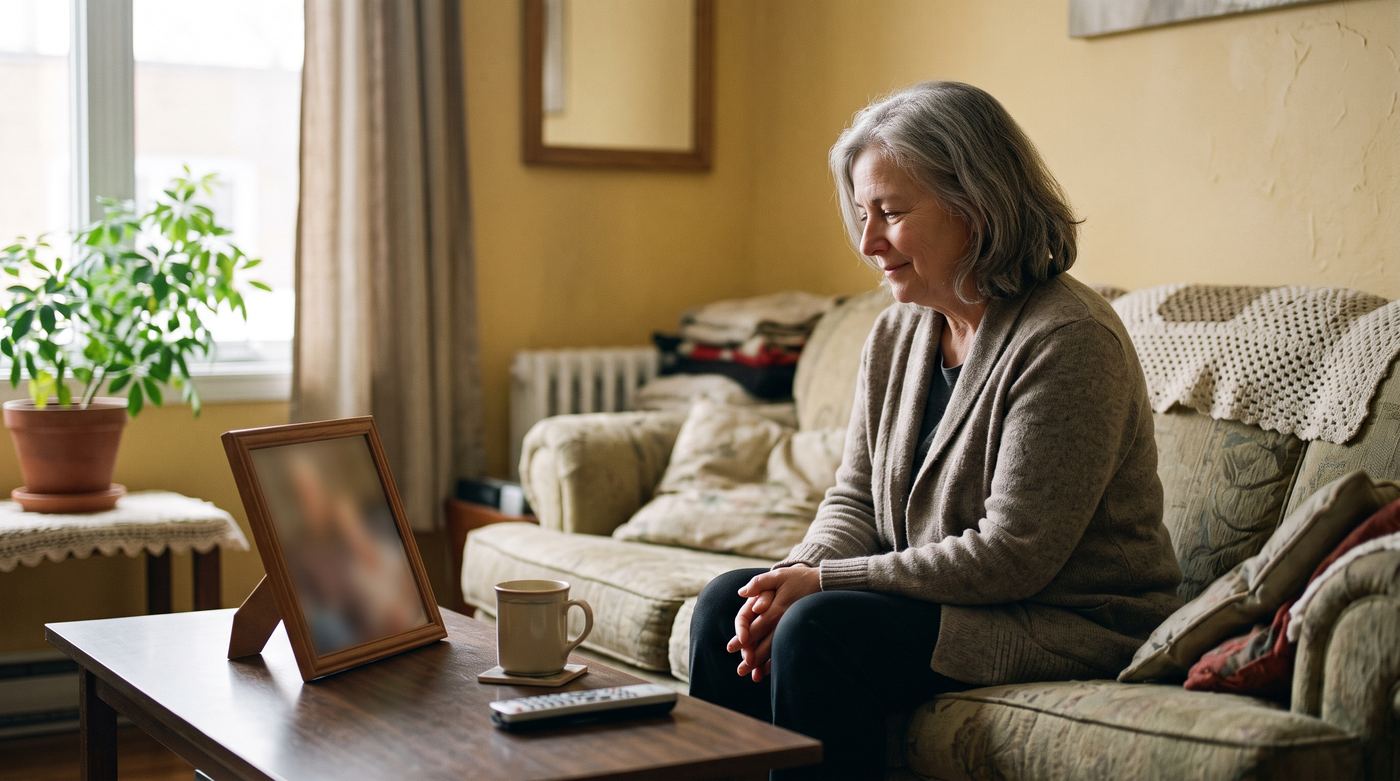
Twenty-two years of living together. A house bought together, but with the title left in Marc's name, because at the time it was simpler for the mortgage. Two children, now adults. No will: they had told themselves they would get to it one day.
Marc dies suddenly. A few weeks later, Louise learns that she inherits nothing. Not the house, not the investments, not the bank account. Everything goes to the children, in equal shares. The children did not want this, and it is not what Marc would have wanted either. It is simply what the law provides.
This situation is neither rare, nor marginal, nor the result of a gap in the law. It is how Québec law normally works, and it is probably the single most important thing to understand for a couple living together without being married.
Without a will, the law writes your wishes for you
Article 613 of the Civil Code of Québec sets out the principle: the succession devolves "according to the prescriptions of law, unless the deceased has, by testamentary provisions, otherwise provided for the devolution of his property."
This is called legal devolution — intestate succession. It is not a punishment or a fallback: it is a predefined order of division, based on precise family ties, that the legislature applies by presuming what a person would probably have wanted. Sometimes that presumption matches the reality of a family. Often it does not.
Article 653 names those who inherit: "the succession devolves to the surviving spouse who was bound to the deceased by marriage, civil union or parental union and to the relatives of the deceased." Three statuses, and only three. The word "spouse," in that article, does not mean just anyone you share your life with.
The least understood fact in Québec law
De facto (common-law) spouses do not inherit.
Not after five years, not after twenty-five. It makes no difference that you raised children together, shared a joint account, paid the mortgage in equal shares or cared for the other until the end. Éducaloi puts it without qualification: de facto spouses have no right to a share of the inheritance.
There is no period of cohabitation in Québec that turns de facto spouses into heirs. The idea of a marriage that settles in on its own over time — the famous "common-law marriage" — does not exist here. And yet Québec has the highest proportion of couples living common-law in the country.
Two doors remain open, and they are the only ones:
The will. A de facto spouse can receive anything you want to leave them, provided it is written in a valid will.
The beneficiary designation. Life insurance, an RRSP or a RRIF with a named beneficiary is paid directly to that person, without passing through the estate.
Nothing else works. Not the length of the relationship, not shared children — subject to what follows — not the intentions everyone knew about.
What changed on June 30, 2025: the parental union
A new regime came into force on June 30, 2025 and changes the picture for some couples. Article 521.20 of the Civil Code states that "a parental union is formed as soon as de facto spouses become the father and mother or the parents of the same child."
According to Éducaloi, two conditions must be met: having had or adopted at least one child since June 30, 2025, and living together. The regime then applies automatically, with no steps to take. Again according to Éducaloi, couples who already had children together born before that date only enter the regime on the birth or adoption of a subsequent child. The Government of Québec indicates that these couples may opt in voluntarily, by mutual agreement.
The consequence for estates is significant: article 653 now places the spouse in a parental union on the same footing as a married spouse and a spouse in a civil union. Éducaloi specifies that the surviving spouse in a parental union automatically inherits one third of the estate, with the other two thirds going to the child or children.
The real scope of this change has to be measured properly. It does not cover couples with no shared child. It does not cover couples whose children were born before June 30, 2025 and who have not opted in. It does not cover couples whose children are from a previous relationship. For all of them, the rule remains the one that applied to Louise and Marc.
Compare before you decide
One request, up to three quotes from licensed Québec partners. Free and no obligation.
Compare life insurance quotesThe legal devolution table
Here is the order set out by the Civil Code. The word "spouse" here means only a married spouse, a spouse in a civil union or a spouse in a parental union.
| Situation at your death | Who inherits | Article |
|---|---|---|
| Spouse and children | Spouse: one third. Children: two thirds, in equal shares | 666 |
| De facto spouse (outside a parental union) and children | Children: everything. The spouse: nothing | 653 |
| Children, no spouse | Children: everything, in equal shares | 666 and following |
| Spouse, no children, parents living | Spouse: two thirds. Father and mother: one third | 672 |
| Spouse, no children, no parents, brothers and sisters | Spouse: two thirds. Brothers and sisters and their children: one third | 673 |
| Neither children nor spouse | Half to the father and mother, half to the brothers and sisters; failing one group, the other takes everything | 674 |
Two definitions help in reading this table. Article 670 specifies that "privileged ascendants" are the deceased's father and mother, and that "privileged collaterals" are their brothers and sisters as well as their first-degree descendants, that is, their nephews and nieces.
Note what the table reveals. Even when married, the surviving spouse never inherits everything in the absence of a will: they share with the children, or with the in-laws, or with the brothers- and sisters-in-law. For many couples, that outcome is already far from what they had imagined.
What gets settled before the division
One step comes before devolution, and it is often forgotten when reading the fractions.
If the deceased was married or in a civil union, the value of the family patrimony is divided first, then the matrimonial regime is liquidated. A spouse in a parental union is entitled to the division of the parental union patrimony. The Government of Québec puts it this way: the surviving spouse first receives what is due to them on that basis, and it is the remainder that is then divided according to the rules of devolution.
What the surviving spouse obtains through the family patrimony is therefore not an inheritance: it is their share of a patrimony that was already shared. The one third provided for in article 666 applies afterwards.
How far the family tree goes
In the absence of a spouse, children, parents and siblings, the succession moves up to the other ascendants and collaterals: grandparents, uncles, aunts, cousins. Article 683 sets the limit: "Relatives beyond the eighth degree do not inherit."
And if there truly is no one left? Article 696 provides that where the deceased leaves no spouse or relatives within the degrees of succession, or where all the successors have renounced, or where none is known or claims the succession, the State takes the property situated in Québec by operation of law. Revenu Québec then administers these unclaimed successions.
Without a will, who takes care of everything?
No one has been designated, and yet someone has to close the accounts, file the tax returns and pay the debts.
Article 785 answers: "The office of liquidator devolves of right to the heirs, unless otherwise provided by a testamentary provision; the heirs may, by majority vote, designate the liquidator." The liquidator — Québec's term for what the rest of Canada calls an executor — is therefore, initially, all of the heirs together, until they agree on one person. Éducaloi adds that in the event of disagreement, they must ask the court to choose.
In a blended family, or where heirs are no longer on speaking terms, this step alone can add months to the settlement.
What escapes devolution entirely
There is one category of property that legal devolution does not touch.
Article 2455 of the Civil Code states that "the sum insured payable to a beneficiary does not form part of the succession of the insured." Life insurance with a named beneficiary is paid directly to that person. It is not divided among the heirs, it does not wait for the liquidation, and in principle it is beyond the reach of the estate's creditors.
That is why this tool comes up so often in conversations about de facto spouses in Québec: it is the only mechanism that lets you get money to a person the law does not recognize as an heir, without depending on a will.
The reverse is worth knowing too. Under article 2456, insurance payable "to the succession," "to the heirs" or "to the assigns" forms part of the estate — and is therefore divided according to legal devolution, among everyone.
Frequently asked questions
After how many years does a de facto spouse become an heir?
Never, by the passage of time alone. No period of living together creates a right of inheritance in Québec. Only marriage, civil union and, since June 30, 2025, the parental union open legal devolution to the surviving spouse.
Can a de facto spouse stay in the house?
That depends on the title of ownership and on what the heirs decide. If the property belonged entirely to the deceased and no will provides otherwise, the property falls into the estate. A notary can explain the possible remedies, particularly where minor children live in the home.
Is a holograph will enough to protect my spouse?
It is valid if it is written entirely and signed in your own hand. It will, however, have to be probated after your death, which involves delays and costs that Éducaloi puts at more than $1,000 through the court. It is better than nothing, and less solid than a notarial will.
Our children were born before June 2025. Are we in a parental union?
Not automatically. According to Éducaloi, you must have had or adopted a child since June 30, 2025. The Government of Québec indicates that couples who are already parents of a shared child born before that date may opt in voluntarily, by mutual agreement. A notary can confirm your situation.
What if the estate is insolvent?
Article 625 provides that heirs are not liable for the obligations of the deceased beyond the value of the property they receive. That protection assumes, however, that the inventory is properly made. Article 630 also allows any successor to renounce the succession.
Compare before you decide
One request, up to three quotes from licensed Québec partners. Free and no obligation.
Get free quotesSources
- Civil Code of Québec, articles 521.20, 613, 625, 630, 653, 666, 670, 672, 673, 674, 683, 696, 785, 2455 and 2456, version current to April 1, 2026: https://www.legisquebec.gouv.qc.ca/fr/document/lc/CCQ-1991 (accessed August 10, 2026)
- Éducaloi, "Pourquoi faire un testament ?": https://educaloi.qc.ca/capsules/pourquoi-faire-un-testament/ (accessed August 10, 2026)
- Éducaloi, "Être en union parentale": https://educaloi.qc.ca/capsules/etre-en-union-parentale/ (accessed August 10, 2026)
- Government of Québec, "L'union parentale : une protection pour les enfants et toute la famille": https://www.quebec.ca/famille-et-soutien-aux-personnes/mariage-union/union-parentale/a-propos (accessed August 10, 2026)
- Government of Québec, division of the inheritance in a legal succession: https://www.quebec.ca/justice-et-etat-civil/testament-succession/succession (accessed August 10, 2026)
- Revenu Québec, unclaimed property and unclaimed successions: https://www.revenuquebec.ca/fr/biens-non-reclames/ (accessed August 10, 2026)
This text presents general information about Québec law. It is not legal advice or insurance advice. For your own situation, consult a notary or a lawyer.